Sunday, 13 January 2019

Inside the incompletely-baked establishment conspiracy to foil Brexit


I got invited to a mini conference in Oxford, run by an important German research institution. Speakers included a historian who often writes on Europe in the newspapers. I am protecting myself with this thin layer of anonymity so as to bite the hand that feeds me.
 
The first day was International Relations theory, genus: high patrician. The ratio of verbiage to assertion was high.  One speaker talked a lot about the global. When adjectives are used as nouns, the wise man starts organizing his email. Another verbal tic is plurals on everything. Academics love plurals because they help divide up the grant money. Sure enough, soon someone suggested “contestations of the scripts of liberalisms”, as an improvement on “contestation of the liberal script”.

At dinner the conversation got more concrete. Everyone was talking about… oh, guess. As background, think panelled oak, candlelight, glasses of red and white; young academics, dressed to impress in jackets, quiffs and trousers; older chaps with accents and mannerisms from a world I thought long vanished. A former ambassador type person got on his hind legs. He started his speech with a quotation. “No man is an island, entire of itself.” I think it’s by Stormzy.

So then the historian-who-often-writes got up and corrected his quotation for him.


Basically, imagine a parody of the British establishment conspiring, produced by Russia Today.
 
Later the historian himself made a speech. Just a few details remain (the wine was good):
  • 13,000 letters* have gone in to Corbyn, persuading him to move.
  • “Write to all the MPs you know”.
  • During the campaign, Europeans will have to “love bomb” the UK – even though we’ve been very silly.
  • He thinks the Brexiteers will use the slogan “tell them again”. He wants a good counter-slogan, maybe “you didn’t vote to be poor”.
  • And having a narrative will be key. (Grammar of political persuasion: they spread fake news; you spin; we have a narrative.) The ambassador suggested “it’s like buying a house, you don’t sign off until you’ve done the survey”. I said I wasn’t sure how relatable that would be in Grimsby. He stared crossly at his drink.
  • Tony Blair is on board, but nobody’s going to listen to his arguments. The best figurehead, he thought, would be John Major.
 
As people ask at the end of conferences, what have we learned?
  1. There really is an Establishment;
  2. They really do want to thwart the people’s will;
  3. They’re clueless.
The third point is important. Somewhere inside, left over from childhood,  I must have been holding the belief that there is someone in charge who know’s what best. This dinner killed that for me. These guys are the ultimate insiders… yet, they have no more expertise or wisdom on the topic than, say, the Big Issue seller who told me the day after the referendum that capital-T They would “never let it happen”. (“I think you’ll find they will,” I replied, strong in my democratic faith.)
 
The arguments I heard were entirely conventional. These being polisci people, they were mainly of the preserve-the-peace-in-Europe variety. The mournful consensus was that this argument was hard to convey to a generation that grew up with the blessings of peace.

Or maybe it is just not very compelling. What is the story which convincingly takes us from Britain exiting the EU to war in Europe? Does Germany invade France again? But those guys are staying in the EU, right?
 
There was no sense of the risks from the point of view of democracy. The historian suggested having a three-pronged referendum: no deal, May’s deal, stay in. I pointed out that three-option votes are shady from a democratic perspective – they split the opposition and induce strategic voting. Someone said, “I don’t see why we can’t use the Single Transferable Vote”.
 
Sounds optimal.
 
Hearing Tony Blair’s name took me back to 2003. I read in his memoirs about why he supported the Iraq war. It was an argument about needing to keep the Western alliance together. It was too subtle for the masses, but he saw! He could see further than anyone else! So he supported Bush, and we went to war, and now we know how that worked out for the Western alliance.
 
These guys think the same way. They think they’re the shepherds. They need to recall the flock from the error of its ways.
 
I haven’t said anything about the substantive issues of Brexit. I will try to do so soon. Preview: they’re huge, long-run, unfathomable. But political scientists talk about the authority heuristic, which is a fancy way of saying that voters follow the judgment of experts they trust. We all need and use that heuristic, in this murky world. We’d all like to find someone to trust.
 
These people want to fill those shoes. But they can’t be trusted, because they don't know any more than the rest of us poor fools.
 
 
* Letters, yes.

Update: tweaked style, jokes, slightly more polite. I forgot to mention the very kind lady who paid my hotel bill when I couldn't because the *☠️😖* admin haven't reimbursed me for last month's workshop yet. Or that the next night saw me eating Mickey D's in Westfield Stratford City, waiting for my bus home, for the same reason. Ah, the contrasts that make life such a story.


Thursday, 3 January 2019

On racism

I wrote a blog post on the concept of race, and I promised to write another one on racism. Here it is, long overdue.

Racism is easier to recognize in the flesh than to define. We know it when we see it, but its boundaries are hard to draw. Today it seems to be one of society’s master concepts – partly because it is so contested. On the one hand, we have the Guardian talking about microaggressions and unconscious bias. On the other hand, serious people are writing books defending white ethnic identity, and asking how much to concede to the popular backlash against immigration. Perhaps thinking about the concept of racism can throw light on this process.

The idea of racism is woven from three different strands:

A.    The history of colonialism, the encounter of white Europeans with other peoples, the ideas they developed about them; the development of European empires and the influence of Darwinism. In this aspect racism is white people’s superiority complex.
B.    Racism can simply mean the belief that races are different – usually, biologically different – in some non-trivial way.
C.    Racism can be defined by a set of attitudes and behaviours which range from hatred, aggression and genocide, through prejudice and discrimination, down to simply having different mental associations about different races, perhaps without conscious thought.

The power of the racism concept lay in putting these three things together. It developed after the Second World War. The Nazis came out of a background of A; explicitly held B; and implemented C in its most evil form, by targeting minorities for murder. Racism was a shorthand for the whole complex. Intellectuals in the US recognized that all of A-C extended beyond Nazi Germany; they found a home, too, in America, especially in the segregated South. This background strengthened the emerging civil rights movement in the 1960s. Since then, as the rest of the world has got richer relative to Europe, America, and other countries of mostly white people; and as immigration to those countries has made them more diverse; anti-racism has continued to be the left wing’s  strongest moral suit, as well as a guarantee of being on the right side of history.

A, B and C do not always go together. My post on race argued that B and C are separate issues. A and C are separate, too. Hutus murdering Tutsis, violence against Zimbabwean immigrants in South African townships, or the Burmese assault on the Rohingya make it clear that non-white people can murder outgroups with as much enthusisasm as white people. You can rescue the association if you say that by definition, only whites can be racist. Some people have tried to make this argument. But it is just implausible. What the Burmese army has done to the Rohingya looks like a duck and quacks like a duck (and after her Nobel Prize, Aung San Suu Kyi drinks milkshake like a duck). If we don’t call it racism, we will just need to invent a new word for evil behaviour to ethnic outgroups.

For that matter, there need not be a link between A and B. In some sense, clearly, race is a concept which develops in 19th century European science and thought. But the broader idea of differentiating and categorizing people based on their tribe or where they come from may simply be part of human mental furniture. The Ancient Greeks called outsiders barbaroi – barbarians – supposedly meaning people who, since they couldn’t speak Greek, simply bleated nonsense like sheep. (Of course, really, the Greeks understood perfectly well that other languages existed.) Many human groups simply refer to themselves as “people”.

As time moves on, and the eras of first European, then American global dominance fade and recede, the spotlight is focusing more on C. Correspondingly, antiracism will become less about dismantling entrenched power structures, because so many of them have indeed been dismantled. Instead, antiracism will focus on individual behaviours and attitudes, on C – and it will become more top-down. (You can avoid this conclusion, so long as capitalism continues to exist, if you argue that capitalism itself is the ultimate power structure and is also inherently racist. I don’t find that plausible, and it will become less plausible as many non-European nations get rich.) The confusion between A and C lets people in authority think of themselves as freedom fighters, whilst in fact they are regulating and monitoring the behaviour of less powerful others.

Indeed this is happening. A cornerstone of modern racism is the idea of unconscious bias, motivated by a powerful psychological experiment called the Implicit Association Test or IAT. You can take this test at implicit.harvard.edu. The IAT uses reaction times to measure how strongly we associate different concepts. This is a test you can’t fool just because you want to sound, or even be, non-racist. It has been a huge hit, generating reams of controversy, an industry promising to improve your unconscious bias, and several competing metaanalyses. It has even entered Artificial Intelligence as a yardstick for judging how computers can learn certain kinds of prejudice. Today, psychology provides a dominant interpretation of racism, as it does for so many other concepts.

A second strand of thought looks at how we talk and think about outgroups. The keyword is “the Other”, which has now been verbed: people think of outsiders as Other, and they “other” them in the ways they talk about them.

Through these spectacles, racism is mundane and pervasive. Everyone does it a little bit.
And it is within ourselves: as George Orwell says, it is a noxious plant that we must diligently weed out from our minds.

This is a powerful, intuitive perspective. Haven’t we all felt afraid of outsiders? Don’t we all try to quell or overcome our prejudices? But it depends crucially on the claim that these mundane behaviours are indeed related to more serious forms of prejudice – say, discriminating against job applicants.

For the IAT, there is some evidence that this may be true, but not really enough to be persuasive. At best, the jury is still out on whether “everyday” implicit bias links to the important differences in outcomes that we see between ethnic groups.

Similarly, while we know that hate speech can help propel genocide – for example, hate radio helped do so in Rwanda – we cannot be so sure about the effect of everyday ways that people talk about other ethnic groups. Indeed, the very idea of “othering” has unclear boundaries. Does it include using the word “they” to describe an outgroup?

If these kinds of pervasive behaviour are not actually linked to real discrimination, then I foresee a problem in describing them as racism.

We all have two sides in us. One side wants to seek out and experience new things. Another side prefers what is safe and familiar. Different people have these sides to different degrees; they are captured by Openness, one of the Big Five dimensions of human personality. These two sides may even be rooted in biology – in how animals resolve the conflict between approach and avoidance, for example. In a big, multicultural society, openness is good to have: it correlates with intelligence and income, for example.

But we all also have the other side; we want to stick with what we know. And this too has a positive aspect: it coincides with what we appreciate more deeply. It is the sense of home. Familiar environments are not just emotionally satisfying. They also enable deeper communication. It is wrong to think that because somebody is from my own culture, I have nothing to learn from them. In fact, shared culture enables deeper communication. At the most basic level, we need some shared language to communicate at all. Beyond that, shared cultural reference points act as a shorthand. I spend much of my time speaking global English – “Globish” – with academic colleagues from all over the world. But when I talk to somebody who shares elements of my own culture – the English middle class – I can communicate in a different way. Calling a politician’s wife Lady Macbeth, for instance, carries a set of implications that would take paragraphs to spell out explicitly.

In fact, these two sides are complementary. Openness lets us appreciate and learn from other people’s languages, customs and cultures. Those languages and customs are different from our own, because they developed separately, over many centuries, among people who preferentially interacted with others like themselves.

It is not a good idea to lump the human preference for familiarity and safety, with the inhuman extremes of race hatred. We all have that tendency. Some have it more than others. Those who have it more tend to do less well in modern society; to stay near home and family rather than moving to opportunity. They are the “somewheres”, in David Goodhart’s phrase. Modern anti-racist discourse, with its very broad definition of its object, risks treating these people as primitive beings who are unable to appreciate diversity, or worse still, as incipient fascists. That is unjust. It is also politically unwise, because it is may push people into the arms of genuine racists – who at least, from their point of view, show them some respect.

Next, a post about sexism... hopefully within the year.


Friday, 8 June 2018

I read Rachel Cusk's Outline trilogy


In three days. I got the first book three days ago and read it that evening, ordered the second one and read it the next day, ordered the third, got it two days later and read it that evening. (Thanks, Amazon Prime. I had to buy the hardback, but I couldn't wait.)
It is very serious art, and unabashedly highbrow. I don’t follow the literary world, but I have a vague sense that there has been a backlash against high-faluting “literature” and in favour of genres and what would have previously been thought middlebrow. These books do not partake in that. There is very little plot, no dramatic events, just one conversation after another. And almost all the conversations are extremely intense: self-aware people dissecting their lives and relationships with the expertise of a sushi chef and the passion of a flagellant.
Reading it is unnerving. The narrator – Faye, a female author doing the rounds of writing courses and literary festivals – talks to other people, or listens to their monologues. They talk about the deepest things in their lives. Other characters are pinned down like butterflies, sketched in a few strokes of extreme skill. Everything is implicit. Neither Faye nor the author – it's in the first person, so the distinction perhaps does not matter – often expresses an opinion.
 But, like Tom Cruise’s pick-up guru in Magnolia, Faye is “quietly judging you”. Family, and divorce, are pervasive in the conversations; everyone has behaved badly, but few want to admit it. Children, even when they are annoying or burdensome, come across as sinned against, not sinning. Freedom is weighed against commitment and it almost always comes out worse, or at least as a let-down; people are at their wickedest and stupidest when they exercise power thoughtlessly. As a child of divorce, I liked the books very much. But I was also troubled and provoked by them, because the narrator, and I guess the author, is a feminist, in some sense, which I am not. (There is plenty of mansplaining, and some atrocious behaviour by entitled guys; and sometimes that feeling of a conversational elephant-trap being laid as a man is allowed to talk himself into a corner.)
In Virginia Woolf’s To The Lighthouse, there is a chapter after the Great War when the cast reassembles, and the author suggests almost playfully that the values they hold should not really be taken seriously; as if the great comedy of the Victorian age, and its literature, can no longer be played straight. Reading Outline felt as if I was rewinding through that historical moment.
Nineteenth-century literature was explicitly judgmental. Dickens and Thackeray, for all their subtleties and play, saw wickedness and called it; and showed it in its harshest colours. And then that earnestness quite quickly vanished. Why?
A superficial answer is the rule of craft that says show, don’t tell. I think a deeper answer is that after the Edwardians, moral judgment got mixed up with aesthetic judgment, judgment of taste; and English judgments of taste, since (I guess?) the eighteenth century, have been made in silence and in code. You couldn’t say that someone was explicitly inferior; but you could imply it to those in the know, with a raised eyebrow.
One danger of this is passive-aggressiveness. I talked to somebody about On Chesil Beach and she asked if I had noticed that the heroine had been sexually abused. And I have heard about literature classes being told the same thing. “Did you spot that? Well done – you are aesthetically and morally sensitive – alive to other people’s hidden sufferings.” But if I was supposed to spot it, why didn’t Ian McEwan make sure I did? What is this, a cryptic crossword?
And in fact, where Faye does speak up and give her own opinions, she seems both warmer and braver. She lays it on the line.
About her we learn very little. She starts the trilogy after her own divorce, and has remarried by the third book. Occasionally her children call. These conversations are very different from the others. There’s less indirect narration, and more ordinariness. These, along with the narrator’s own talk, are the warmest parts of the book. It’s as if she and the reader can suddenly breathe out.
At the very end, the narrator is bathing in the sea when a man comes to the water’s edge and pisses in it. She watches his “merry, cruel face… and I waited for him to stop.” It’s a scene out of myth – the sighing breast of the sea, and the grinning Satyr. But I don’t know whether Rachel Cusk thinks of it really as myth, or as a piece of history, which could be brought to an end somehow.


Sunday, 15 April 2018

The House of Government and the relative nobility of communism


Robert Conquest, the poet and deeply anti-communist historian of the Soviet Union, thought that fascism was worse than communism. Asked why, he replied just "I feel it to be so". Perhaps the feeling is that communism was a noble cause that went wrong, whereas fascism never had anything noble about it. Anyway, reading The House of Government made me question that idea.

It is a huge, brilliant book about the inhabitants of one house in Moscow – a purpose-built creation designed to house the elite of the new regime, and inhabited by the Old Bolsheviks, who had made the revolution and fought the civil war against the Whites. The Old Bolsheviks certainly have something of the nobility of an old-time religion: they start the book under Tsarism, holding secret meetings by gaslight, or exiled to Siberia. And the book itself takes the communism-religion analogy very seriously, drawing comparisons from early Christianity, early Puritanism, and the Great Disappointment of the US Millerite sect.

But before admiring devotion to a cause, we need to know the cause's nature. An especial wickedness of communism, which it shared with fascism, was that it deliberately endorsed and encouraged hatred and cruelty against the enemy. For example, here is a passage from The Iron Flood, a civil war novel, in which the heroes take a Cossack town:


Note that this is not an underground or marginal text. It was a set text in schools until the end of the Soviet period. It is not atypical either. In the civil war, merciless killing of men, women and children was endorsed in reality as well as novels. To be merciless and brutal, since mercilessness and brutality were necessary, was a mark of moral strength and hardness. Stalin meant "man of steel". The Bolsheviks were the first people to favour the tough-looking leather jacket.

The catalyst for this evil was surely the brutality of the conflict, but it must also have had roots in Karl Marx's crisp analysis of conventional morality. Bourgeois morality was part of the bourgeois economic system: talk of human rights or humanist values was claptrap when most of humanity was enslaved. The only morality was to do whatever furthered the revolution. Then again, perhaps communism was simply of its time. The same worship of strength can be found in Kipling, say; expressed more subtly, in Nietzsche; later, in fascism. The result, in any case, was that Bolshevist communism became a death cult.

Some of the behaviour patterns are still with us. The bilious twitter monkeys of the extreme Left, for whom abuse and hatred are both tactics and habits, are more or less conscious followers of this Bolshevik tradition. Luckily, as of today they remain safely confined to the zoo.


Sunday, 8 April 2018

Vague theories: a defence


Most scientists believe that vagueness is bad in a scientific theory. In fact, if it’s vague, it cannot really be a theory at all. At the hard end of the social sciences, economists insist that theories should be formalized in the crisp language of mathematics. Even in softer-edged disciplines, which often get accused of vagueness and waffle, very few people defend vagueness explicitly. Instead, they use arguments about the meaning-ladenness of human action, or the holistic interconnectedness of the social world, to argue that social science should aim for understanding rather than explanation. But understanding is still meant to be clear.

Actually, mathematics is not enough to avoid vagueness, as Paul Romer has pointed out in a controversial article on “mathiness” in the theory of economic growth. Mathiness is a word coined on the analogy of the Daily Show’s “truthiness”: when something “feels true in your gut” rather than actually being true. Mathy economic theories have a valid mathematical argument in their model, but the connections between the maths and reality are vague or ill-defined:
McGrattan and Prescott (2010) establish loose links between a word with no meaning and new mathematical results.
Boldrin and Levine (2008) make broad verbal claims that are disconnected from any formal analysis.
This suggests a puzzle. If the words and verbal claims in a theory must be connected via tight links to a formal analysis and mathematical results, why aren’t they part of the mathematics themselves? If economists build models because ordinary language is imprecise, then why is any ordinary language allowed?

Having sown these seeds of doubt, I will present three examples, and a bonus fourth, of theories that are vague but useful. I am not arguing that vagueness is a theoretical virtue. Instead, it is a disadvantage that must be traded off against competing values, such as relevance. Also, perhaps, the tradeoff approaches infinity as vagueness goes to zero: a perfectly defined theory would be a theorem in pure mathematics, with no relationship to the world; insofar as it connects to the world, it has to be a bit vague.

Theory 1: watch out for that truck!


This is a very simple theory. Its usefulness, if you are about to step into the road, should be obvious. But it is vague, because a key term is not precisely defined. What exactly is a truck? When does a van become a truck? Even people from Texas aren’t sure.

Van? Truck? Vruck?


Theory 2: Western societies are threatened by Islamic terrorism


This theory could be true or false. It is perfectly legitimate to argue that terrorism’s threat to the West is manufactured, or hyped, by the warmongers in power. But the theory is at least worth arguing over. After the Twin Towers attack, Western societies needed to decide what to do, which involved making judgments about this theory. Yet the theory is clearly vague. There is no clear uncontested definition of terrorism, or of “Islamic” terror. (Is it Islamic terror when a small-time drug dealer or mentally unstable loser decides to ram a van into some people, after posting some Islamic-tinged rants on Facebook?) Or of “threat”. Or of “societies”. Or of “Western”. A lot of the debate about this theory consists in making terms more precise. But you have to start somewhere.

Theory 3: fluxions


Modern science, with its mathematical basis, was kickstarted by the enormous prestige of Isaac Newton’s theory of gravity. Under that theory lay his advanced mathematics, in particular his development of the mathematical derivative – he famously fought Leibniz over priority on the topic.

The derivative can be loosely defined as the slope of a function. Awkwardly, its precise definition was not clarified until 150 years after Newton wrote. In particular, the idea of a slope at a point involves the idea of a “limit”, which was finally explained by Bolzano and Weierstrass in the 19th century.

For the first half of its history, Newton’s theory, the key theory underpinning the development of modern science, was vague, meaning not that it had an uncertain real world referent à  la “truck”, but that we could not even explain clearly what a key term meant. Newton recognized this explicitly and was uncomfortable enough to write a book about it.

Bonus Theory 4: the truth shall set you free


This is a saying attributed to Jesus. The actual quote, from John 8:32 in the King James Version, is: “And ye shall know the truth, and the truth shall make you free.”

The theory is frankly obscure. But it would be hard to say that it has not been influential. It may be that with respect to it, we are in the position of eighteenth-century mathematicians with respect to the calculus. It is a theory that seems important, but we cannot explain why.

I'll finish by quoting Edmund Burke's catchily-named A Philosophical Enquiry into the Origin of Our Ideas of the Sublime and Beautiful. The argument in this remark seems superficial, but I think a deeper point is lurking there.
But let it be considered that hardly anything can strike the mind with its greatness, which does not make some sort of approach towards infinity; which nothing can do whilst we are able to perceive its bounds; but to see an object distinctly, and to perceive its bounds, is one and the same thing. A clear idea is therefore another name for a little idea.

Friday, 30 March 2018

On race


Where Left wing economic ideas have been in eclipse for half a century, their social ideas have been hugely successful in changing attitudes, and backing up those changes with institutions. This is the first of three essays which take stock of this social agenda. They will focus in turn on three defining enemies of the post-1960s "equality agenda": racism, sexism and homophobia.

Race


The modern anti-racist impulse came from the discovery of Nazi crimes in Europe. Ideas of innate racial differences had served to justify Nazi racial hatred. Back home, Americans found the same ideas supporting the segregation of the Jim Crow South. In the struggle to change this and similar systems, the word racism came to cover two concepts:
  1. A belief in innate, natural differences between racial groups.
  2. Hatred, prejudice and discrimination against other races.
Racists believed (1), and their belief was caused by, and served to justify, (2), so it was natural to name a single syndrome for both aspects.

This concept leads people to think that if (1) is true, then (2) is justifiable. This seems to be agreed by both racists and anti-racists.

The problem is that (1) – let's call it the "natural differences" hypothesis – is an empirical claim about the world. It might have turned out to be false. It still may turn out to be basically false. But as time goes on, that is looking less likely. To explain this, I need to talk about the science of race and ethnicity. I claim no deep expertise in genetics. But I do know a bit about both genetics and about the social science of ethnicity, which I hope gives me some standing to discuss both.

The genetics and social science of races


First, racial groups are a kind of ethnic group, and ethnic groups are best seen as political identities. Being, say, white or Hispanic in the US is more like supporting a football team than like being tall or short-sighted. It is an identity sometimes chosen by ourselves, sometimes imposed on us by others. There are many examples of ethnic identities changing with political circumstances. For instance, the US census used to ask people if they were white or black; it now asks if people are white, black or Hispanic. The reason is that with greater immigration from Latin America, being Hispanic became a salient political identity in the US. Politicians campaigned for the Hispanic vote, and Hispanic people worked together to support shared interests. There are similar cases in Africa, where tribal identities are shifted by the demands of politics.

Ethnic group identities are ascribed by descent – you get them from your parents. Racial groups are a particular subset of ethnic groups where the “badges” that categorize people include natural characteristics like skin colour, which relate to relatively long-run differences in ancestry. These characteristics often vary continuously, and people may spend a lot of effort policing the boundaries of the group: 19th century America had a whole terminology of “quadroon” and “octoroon” to describe different mixes of black and white ancestry.

Nevertheless, while the categorization is social, the characteristics are natural and inherited. This means that the natural characteristics which place you into an ethnic group correlate with your ancestry, which in turn correlates with other genetic differences. There are some well-known examples: people of African descent are more likely to carry a genetic variant putting them at risk of sickle cell disease; there are similar cases for Ashkenazi Jews, who went through a small population bottleneck in the first millennium AD.

They might also correlate with genetic differences that cause important psychological characteristics. As twin studies show, almost all psychological characteristics are partly genetic: that is, differences in two individuals’ characteristics partly reflect differences in their DNA. So, there could be differences between racial groups on any of these characteristics.

“Could be:” there’s the rub. We don’t know yet. As is often said, the fact that inter-individual differences have a genetic basis does not imply that intergroup differences are. But that works both ways: the fact that inter-individual differences are partly environmental, equally, does not prove that intergroup differences are environmental.

So, with all this data, why can’t we find out? It turns out that resolving the question is harder than it sounds.

What we don’t yet know


First of all, you can’t just gather a sample of different ethnic groups, test for genetic variant X, and see how this correlates with your psychological or social outcome of interest. To see why not, try a thought experiment. Take a genetic variant for dark skin. Now, let’s sample the whole US population and test whether this variant affects people’s income. Surprise! It has a large effect. Have we discovered a pathway from the gene to the brain’s famous money-making centre – the nucleus Wallstreeticus? Nope. I told you, by hypothesis, the gene only affects skin colour. Of course, people with this gene are more likely to be black; and black people in the US have less income on average; so our gene is associated with lower income. But we knew that already. There is gene-environment correlation. That tells us zilch about causation.

This problem has led geneticists to focus within populations, rather than between them, in their hunt for causal variants. Mostly, they look at white people. Even among white people, they try to control for broad ancestral differences. The most extreme version of this is to look within siblings from the same family. This way you can identify the true effect of a given variant, because genes are handed out randomly from parents to children.

But now we have a second problem: the effect may be different among different ethnic groups. A variant which makes white people taller may not do the same for black people: first because different bits of DNA interact to build a human, and white and black people’s DNA differs on average; second, because DNA takes effect in a social environment, and ethnic groups are exposed to different environments.

This means that while we know a lot, and are learning fast, about what genes affect what individual outcomes, we are much less sure if the effects are the same between ethnic groups.

But we will inevitably learn – unless we decide to only do “white people genetics”, which would be a terrible idea medically and scientifically. And once we can estimate the effects of variant X in different ethnic groups, we can ask counterfactuals like “what if this group had the same proportion of variant X as this other group?” Or in other words, how much does a given gene contribute to intergroup differences?

We might then find that the total contribution of genetics is large – in effect, that the natural differences hypothesis is true.

My personal hunch is that this is rather likely. Nobody else need agree. But there are some straws in the wind:
  • Polymorphisms in the MAOA gene vary between human ethnic groups. They have also been linked to behaviours like aggression, risk-taking and addiction. (In 2007, the press got hold of this and coined the phrase “warrior gene”.) Single genes rarely have large effects, but nevertheless the evidence on MAOA seems to have held up reasonably well.
  • This paper shows that different human populations have been undergoing selection for different characteristics, including height, educational attainment and, delightfully, “self-reported unibrow”.
  • Nations with more individualist cultures have higher prevalence of a serotonin-linked allele. (This is just a cross-country association, not a causal link, so the case is still very much open.)
So it is worth asking: what if "natural differences" is true? What would that mean?
 

When a concept falls apart


The concept of racism is highly moralized. Most people think racism is bad (me too). Since nobody wants to think of themselves as holding wicked beliefs, the prospect that natural differences might exist has led to some odd reactions:
These arguments are silly. But if natural differences exist, how would it actually matter?

There are two contrasting views here. The first is rather maximalist, and seems to be shared by anti-racist campaigners and racists alike. Both think natural differences would change everything. This leads anti-racists to argue that believing in them is wicked; and racists to support them and draw extreme political conclusions.

The second view is more relaxed. Charles Murray and Herrnstein put it like this in The Bell Curve
We cannot think of a legitimate argument why any encounter between individual whites and blacks need be affected by the knowledge that an aggregate ethnic difference in intelligence is genetic rather than environmental.
In essence, it doesn’t matter what the causes of intergroup differences are; we still have to deal with them, and a genetic pathway is just another way to intervene. I lean towards this second view, but with some qualifications.

Let’s take a relatively extreme case. Suppose that we learn there are genetic differences between white and black people in the US that – with society as it is – cause substantively large differences in IQ, educational attainment and income. (To repeat: I entertain this here as a hypothesis. As of 2018, you are perfectly entitled to believe that this is false.)

In this case, would it be justified to discriminate by race, for example by preventing black people from voting? Of course not. We can see this, just by thinking of the really existing group of people, of all races, who actually are unintelligent. We could easily and directly identify these people, without any genetic whizzery. But we do not think that dumb people should not vote, or should be denied other civil rights.[1]

What about individual discrimination of a more low-level kind? Would it be OK to deny black people job interviews because of their race? No, it would not. It is a core tenet of liberalism that individuals deserve to be evaluated on their merits. We should treat people as people because that is the right thing to do.

OK, so it might be wrong, but surely it would be tempting – and sensible! Individual self-interest might easily lead employers to save time by only interviewing the white guy, right?

Not really. Consider three ways to learn about someone’s intelligence – in the straightforward practical sense of “is this person smart enough to do their job well?”
  1. Make the judgment based on their race.
  2. Ask for a cheek swab and estimate intelligence from the person’s genes.
  3. Make them do an IQ test.
  4. Look at their CV, and/or talk to them in an interview.
The respective merits of the last two options are arguable, based on how much weight you place on IQ tests. But it is a known fact that 2. is much worse than 3., and always will be; and I am pretty sure that 1. is worse than 2. and always will be.

2. is worse than 3. because genetics only explains about half the variation in intelligence – any presently available genetic test explains much less than that, but even the best possible genetic test would only get half. 1. is worse than 2. because there is a lot of genetic variation within-groups – more than there is between groups, for most things.[2] So racist hiring will continue to be a bad idea, as well as wrong.

In short, if we find substantive genetic differences between ethnic groups, it will not change how society should function. But it may change our politics.

The first change would be epistemic. Different ethnic groups get different outcomes in many, many ways, and these differences are often used to argue that society or institutions are racist, i.e. that they treat people differently based on race. But if genetics provide an alternative explanation, then this argument is not valid. This is the same argument at group level that has already been made at individual level. Thoughtful people now accept that e.g. class differences in outcomes from education are not, in themselves, a proof that schools serve poor people worse: you have to do more work than that. The same may apply to ethnic differences.

The second change is more unpredictable. Call it the “James Watson wants his job back” factor. (The co-discoverer of DNA lost his position after suggesting that Africans were less intelligent than other races.) For a generation, to hold such views has been thought wicked, and people who express them have paid severe penalties – the most obvious being Charles Murray, who wrote twenty pages on race in a long and prescient book on inequality, and is still being monstered a generation later.

In this respect a certain shift has become noticeable of late. The argument has moved from “they are racist and wrong” to “they may conceivably be right, but they were arguing in advance of the evidence”.[3] But in science, we do not normally blame people for being the first to be right. I wonder whether the condemnation of these people has become an end in itself.

This may be a minor issue – delayed justice for a few intellectuals – but it could become more than that. If a large component of elite discourse on race – what people have been told with great firmness and authority for years – turns out to have been wrong, it is hard to predict the effect on the public debate on, say, immigration.

The lesson here is not to infuse your science with morality, and make your morality depend on unproven science. If you do so, you may paint yourself into a corner.

I will say more about this in my next post, on racism.

Postscript: a qualification


I should make it clear that if the natural differences hypothesis is true, it is true in a very different sense to that of the eugenics of the 20th century. In particular, “race” in the biological sense is not a box you can put someone in; it is shorthand for being a bit more genetically similar to some people than to others. Very few DNA variations are exclusive to any ethnic group.[4] This means that statements about racial groups and (the genetics of) any characteristic are always probabilistic. They will be claims about averages. In particular, they should be interpreted, for any individual, in the light of other information.

For example, I teach many Chinese students; I think it is possible that people of Asian descent have higher IQs on average than white people, for genetic reasons… but this does not keep me awake at night, because I have a PhD and my students don’t, which is much more informative than my ancestry about my capacity to teach them. Or for a more relevant example: if you know that somebody is an immigrant from country X, you know two things about them, first that they were born in X, second that they came to your country. The second fact may easily tell you much more about their intelligence – even their genetics – than the first.

Footnotes

[1] Well, some people do… but that’s a stupid idea itself.

[2] Race-based judgments could have the advantage of picking up environmental differences between groups which genetics don’t capture, such as social disadvantage. But clearly, this has nothing to do with genetic science.

[3] David Reich’s recent New York Times article does this to James Watson, for example.

[4] Interestingly, those that are are almost always to do with physical appearance.

Wednesday, 28 February 2018

Looking for your keys under the lightning: social science in turbulent times


It is time to come out. I am writing a book. When I tell this to senior academics, they wish me "Good luck," and their eyes gain a mysterious, troubled look. Writing books is not what economists do.

Here is a self-justifying sketch of the relationship between social science and its historical setting.

Think of the possible states of society as a multi-dimensional space, each dimension corresponding to a variable: the growth rate, inequality, the price of corn, the prevalence of opiate addiction and so on. Different societies or parts of society – Kansas and New York, Denmark and Greece, or South London and North Oxford – are at different points in the space.

Nearby societies are at different points in a many-dimensional space

Some exogenous variables are like the weather: they change naturally, but we cannot change them. Others are policy variables, in the broadest sense that they can be affected by collective human choices. The optimal value of the policy variables depends in on the value of the exogenous variables. Social science involves working out how our welfare depends on the policy and exogenous variables.

At settled times in history, society appears static. Expected changes in the exogenous variables are small, and welfare appears high, suggesting that policy variables are about right. In this state, social science involves looking nearby in the social space – probably within the convex hull formed by different existing parts of our society. This gives us lots of data.

Economists talk about "looking for your keys under the street light". The idea is that your keys, if you have lost them, are no more likely to be lying under the street light than elsewhere; but it makes sense to look under the street light, rather than in the dark where you won't see them anyway.

In settled times, we look under the street light. Prestigious social science involves careful empirical work, leveraging the available data to recommend incremental policy changes. Think of Esther Duflo and the economist as an engineer, or, as Keynes once wistfully suggested, a modest profession like dentistry.
Social science in settled times: looking for small changes within the convex hull* of what is known
[* the shape shown is not quite convex, but eh.]

Other times in history are times of turbulence, of fast change and widespread dissatisfaction with the status quo. Expected changes in exogenous variables are large, or social welfare appears low, suggesting that we need large changes in policy variables.

In turbulent times, we need to explore remote points in the policy space, beyond the convex hull of what is known. Social science involves bold steps of imagination and deep theoretical examination of current and possible structures. Think of Marx and what Joan Robinson called his intellectual "seven-league boots", striding forward over trivial details. Or think of the public choice movement of the 1970s, which looked at the foundations of political constitutions. In fact, we need to "look for our keys under the lightning" – flashes of insight which illuminate the whole landscape and point to big possible changes.


Social science in turbulent times: looking for keys under the lightning.

Today we are living in turbulent times. The economy is changing fast as the centre of the world moves East. Politics, driven by voter dissatisfaction, is just as fast-moving and less predictable.

Of course, it is arrogant to assume that you can produce a bolt of intellectual lightning! But if the premium is on lightning, then it may be worth trying.

This is why I am ignoring my senior colleagues' troubled looks, and writing a book.

Sunday, 25 February 2018

Hello Daaaave...

From my previous post on new media:
Those politicians that grasp this new reality – Leftists like Corbyn, nationalists like Trump, centrists like Macron – win elections. Those that don’t, don’t.
Let's stay on this topic. I got an email from Brandon Lewis yesterday. Brandon Lewis is the new broom at Central Office, part of his remit being to bring social media pizzazz to match Momentum.
Dear David,
What's up, Brandon?
With your support, we’re shaping the future of Britain. But Labour want to stop our progress.
Oh dear! That sounds generically bad.
That’s why the Prime Minister wrote to you, David.

And so it goes on. I'm not saying it was necessarily written by a smart-suited young person in marketing. It seems that way, but who knows? Maybe Brandon – or as I call him, the B-Dogg – penned and sent it himself, with all the friendly personal touches.

So anyway, current wisdom runs that we can keep Theresa May, because she's still a bit ahead in the polls.

The last time Theresa May was ahead in the polls
That'll probably be fine!


Saturday, 24 February 2018

The fake news hysteria and the Intellectual Dark Web


Two writers, from Left and Right, make contrarian, optimistic arguments about the effect of the internet on public debate:
Both make interesting points, but their optimism is unwarranted.

What is really going on?

Lower costs

The internet has dramatically reduced the cost of publishing. The market for news and opinion has gone from an oligopoly to a classical free market, with many sellers and many buyers. What before required industrial-scale machinery and a nationwide distribution network can be done by anyone with a Facebook account.

By standard economic theory, that should be good for consumers, providing more variety at lower cost. Mr Murray and Professor Milanovic both broadly take this line. But long ago, Joseph Schumpeter argued that monopoly could be better for innovation than free markets. A monopolist would expect to reap all the dividends from investing in new techniques; in a free market, other sellers could and would steal your new ideas.

For news production on the internet, this argument applies in spades. Newspapers always competed for the scoop and knew their rivals would follow the story up the next day. (In the jargon, news is non-excludable.) The internet has exacerbated this: an article which took weeks of gumshoeing to produce can be copied in a second – even if not literally copied and pasted, its ideas can be taken. The traditional press is right to grumble that Google News and Facebook are killing its business model.

The result is that analysis, which anyone with a brain can produce, proliferates, but actual reporting, which costs time and money, withers. And so, instead of scoops, we get front page news about cold weather snaps. The extreme version of this is the Daily Express in the UK, which has given up reporting as too costly, and fills its headlines with press releases about heart disease drugs.

Unfortunately, modern democracies need the information gathered by reporters much more than they need analyses from social scientists and pundits.

The end of the consensus

The old media firms were not neutral actors. To get political news, the journalist asked his pals in the government for a juicy story. In return, they expected favourable coverage. Different organs allied with different political tribes, but when the elite as a whole agreed on some view, challenges to that view went unheard.

This was the old-style social construction of reality. It was certainly problematic. On the other hand, a consensus, even a biased one, provides society with the evidence base it needs to make collective decisions, and common ground as the basis for constructive debate.

Clickbait

That has all gone. The Sun can no longer swing elections with its headlines. A paper publishes a fishy story about Jeremy Corbyn meeting a Czechoslovak spy – his rebuttal, on Youtube, gets a million views in a day. 

Those politicians that grasp this new reality – Leftists like Corbyn, nationalists like Trump, centrists like Macron – win elections. Those that don’t, don’t.

Back in the day

 Is this the democratic ideal realised? Nope: you can also get a million hits by reporting fake news on Trump’s gorilla channel. News has another quality: it is an experience good. What we buy are “stories”. We cannot find out for ourselves which stories are real. The market failure this would normally cause used to be mitigated by a journalistic outlet’s reputation. Broadsheet newspapers were biased, but they left the really garbage stories to the tabloids.

In a market with a million outlets, all copying each other, this partial solution no longer works. As a result, we are drowning in clickbait.

What solves public goods problems?

The actors in this new reality will not be thoughtful bloggers like Branko Milanovic. They will be states. States can control the flow of information within their borders. They have the resources to produce fake news, real news and everything in between. They can step in and solve the public good problem. And they have the incentive to do so, because states need to produce consensus supporting their actions.

Professor Milanovic occludes this point by describing Al-Jazeera, Russia Today etc. as “foreigners” as against the “Anglo-American” media. But this misses a distinction: Russia Today is directly an organ of the Russian state. The New York Times is not.

Similarly, the fragmentation of the internet into national borders is not a reactionary backlash against the new open world. It is part of the same process. It is the obvious next step.

What is there to celebrate here? Yes, now the West knows what it feels like. But when Radio Free Europe broadcast into the Soviet Bloc, it was passing on the truth – at least some truth – from liberal democracies to dissident citizens in some thoroughly nasty dictatorships. When RT broadcasts to us, it gives us lies and conspiracy theories.

Western hegemony was often exercised brutally. Many liberals and progressives, sensing its end, mistakenly infer that the rising powers – Russia, China and their allies – will agree with their values better. This wishful thinking will deserve the nasty surprise it gets.

Hobbits and hooligans

Douglas Murray celebrates the availability of new ideas that challenge the consensus. I agree: I’m glad to read Jonathan Haidt or Nicholas Christakis or Sam Harris.

We now have a free market in theories. Whereas before we all had to buy the one theory, we now can pick the one we like best. Will the best theory win?

The political theorist Jason Brennan describes three kinds of citizens. There are hobbits, who like comfort and don’t want to be made to think; hooligans, who gather evidence to support their preconceptions; and vulcans, rational thinkers like Spock in Star Trek, who make ideal citizens because they inform themselves impartially. Evidence from public opinion research provides the kicker: basically, Vulcans don’t exist. There are only hobbits and hooligans. Jason Brennan is skeptical about democracy.

Jordan Peterson seems like a good guy, and who is to disagree with rules in his book like “Stand up straight with your shoulders back”? Whether that is intellectually ground-breaking work, I am less sure. It sounds an awful lot like Make Your Bed (author Admiral William H McRaven, US Navy, retd). In general, there is a market right now for sensible, Victorian advice. What Professor Peterson does seem to have is great charisma as a lecturer.

Intellectual progress requires more than the existence of competing views. Those views must meet in reasoned debate, and the better argument must win. The blogosphere, or Intellectual Dark Web or whatever, has not yet proved its ability to generate this kind of progress. I hope it does. Meanwhile, it is certainly nice to find intellectual allies, and the internet can provide that for all of us.

Tuesday, 16 January 2018

Days when I'm glad to be in an economics department

Several of my political economy students found an article in the Journal of Public Policy (ungated link), on differences between the EU and US in lobbying. The key evidence, from interviews with corporate lobbyists, and doubtless obtained with great difficulty, is presented in this table:


Sophisticated data analysts will notice a certain element is lacking.


> tmp <- as.table(matrix(c(30,20,15,32,36,14), 3, 2))
> tmp
   A  B
A 30 32
B 20 36
C 15 14
> chisq.test(tmp)

    Pearson's Chi-squared test

data:  tmp
X-squared = 2.7411, df = 2, p-value = 0.254


From the article:

In the U.S. we see less compromise and more 'winner-take-all' outcomes and the winners, more often than not, are industry representatives (which will be discussed in more detail below).
Data is then broken up by subcategories...


... and a number of interesting observations are made.

This article has 247 citations.

:-/

Friday, 12 January 2018

Generic sins for student essays


When I mark essays, some types of comments come up repeatedly. I've written them down here. This lets me write down the best possible explanation once, instead of many times.

A note on style and marks
I will often correct your style, partly because I hate bad writing, and partly because one of the most important things you can learn is how to write well. Bad writing will not usually in itself give you lower marks: this is not an English course. But if bad writing is a sign of incoherent or vague ideas, then you will lose marks from that. Also, sometimes the writing is so bad that I literally do not know what the author is saying. See below, what mean?

ACADEMESE
Don’t try to write like an academic. Academics are lousy writers. Students pretending to be academics are even worse. Write as if you were explaining something to a friend, in the clearest and simplest way possible.
BAD: The work of X can keep such criticism at bay
BETTER: X’s work shows this criticism is wrong

BAD: Mill puts forth the notion of “…”
BETTER: Mill says “…”
(“such” is usually academese. Would you say “such criticism” in the pub? Sounds like such bullshit.)
BAD: it was the posit of a rational pursuit of goods which made analysis economic...
BETTER: economic analysis typically assumed that people pursued their goals rationally
(In general, don't use nouns when you can use verbs.)
BAD: numerous
BETTER: many

Basically, if you sound pompous, you sound stupid. So try not to.

JARGON
Relatedly, don't use jargon unless you need to.
BAD: This is exemplary of a non-Pareto optimal realisation of policy.
BETTER: This is bad.

VERBOSE
Express each thought in as few words as possible. See also padding. Edit yourself. The delete key is your friend:
authoritarian regimes can be characterised by their willingness to bribe and use violence...
PADDING
Don’t pad out your word count. It’s obvious, and it won’t gain you marks, because I don’t want your essay to be long. I want it to be short, so I can finish marking the damn thing and do some research/go to the pub/take a candlelit bath with relaxing music.

FENCE-SITTING
Don’t use language to cover up uncertainty. Take a position, or honestly say you don’t know.

WHAT MEAN?
Your obscurity, fence-sitting or academese are so bad that I literally don’t understand what you are trying to say. Naturally, this is not good for your mark.

HUGE QUOTE
If you want to cite someone's paper, don't just quote great chunks of it: explain it in your own words. This makes your essay more coherent, and reassures me that you have understood what the other person is saying - not just copy-pasted it.

In the worst form of this disease, the whole essay is a patchwork of quotes held together by joining text. Why bother?

LAUNDRY LIST
An essay structure which lists a large number of arguments, without leading the reader from one to another, or explaining their role in the argument. More coherent than collection of paragraphs, but still hard to read.
RANDOM READING
Don’t just read papers/blog posts at random. Instead, start reading from what has been recommended. Put effort into searching for relevant papers - which aren’t necessarily ones with relevant-seeming titles. Try to work out whether a paper or book is important (citation counts help somewhat). The ability to find relevant papers is part of what we want you to learn.
Informal sources can be very useful but need to be consumed critically. If you only have blog posts and newspaper articles in your bibliography, then you probably have not read enough.

COLLECTION OF PARAGRAPHS
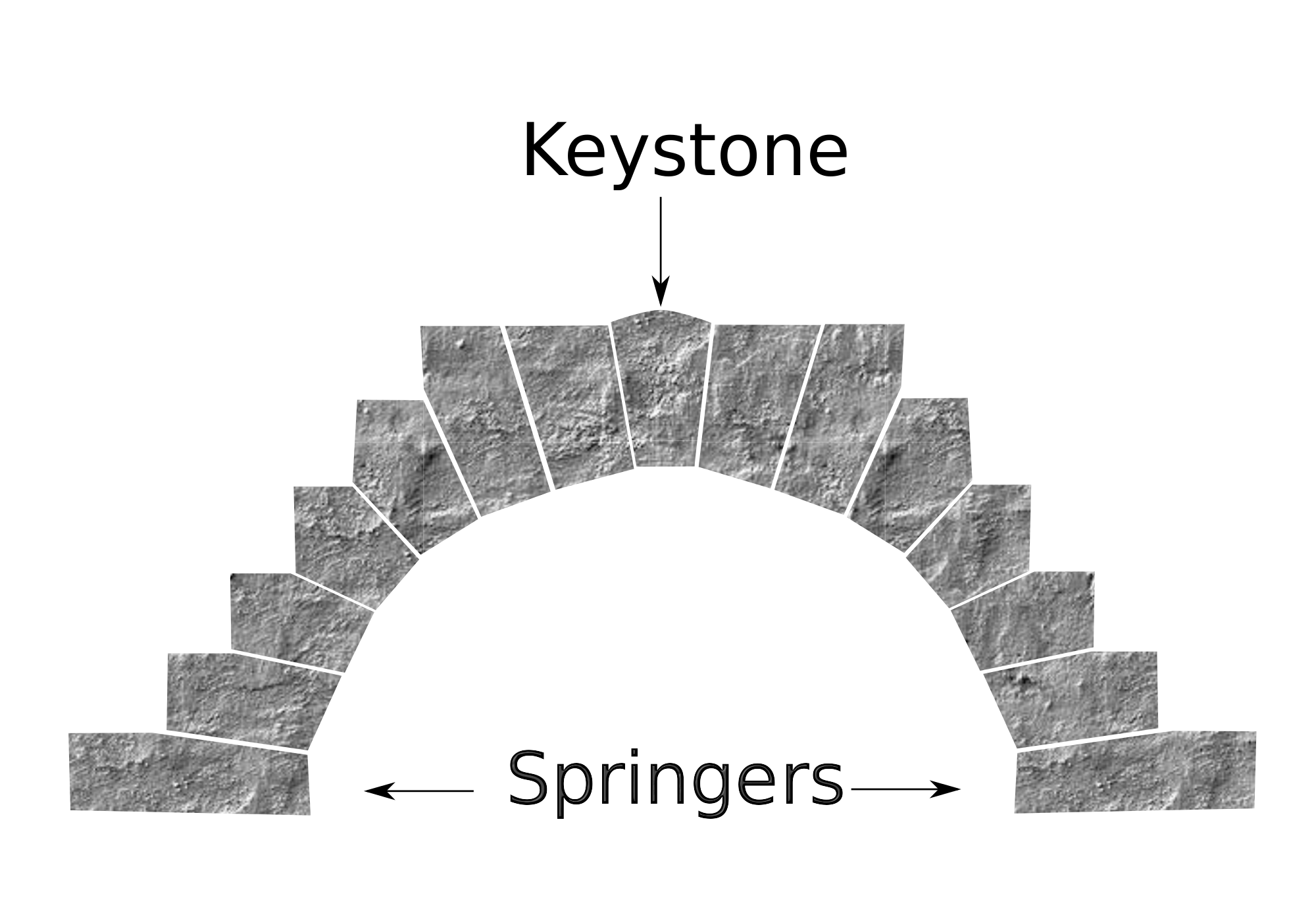
Individual paragraphs in your essay make sense, but they have no discernible relationship to one another. Each paragraph should build on the last, like stones in an arch:Image result for arch stones 
Your work is more like:

Image result for rubble 

COLLECTION OF SENTENCES
Like collection of paragraphs, but at a lower level. Individual sentences make sense, but I don't see how they relate to each other to form a coherent paragraph.


SECTION HEADINGS
These are a bad idea in a student essay. They're overkill for 2500 words, and they are often a sign that you don't have a single, clear thread of argument.

Tuesday, 5 December 2017

Scientism and my shrink


Some time ago I started seeing a psychotherapist, a Jungian whom a friend had recommended. My excellent research assistant, a psychology PhD, was surprised and scornful: “You realise that’s not real scientific psychology?”

Jung with pipe

She was right, of course. Jung is taken no more seriously than Freud by modern psychologists. There’s no evidence that Jungian psychology is practically effective either. Until the rise of cognitive behavioural therapy, no school of therapy did better than any other in scientific trials, or even better than just talking to a friend. With apologies to lay people, we can write this down in an equation:

ATEJung    =     E[x | J = 1] – E[x | J = 0]     =     0                                 (1)

where x is mental health, E[x | J = 1] is the expected level of a person’s mental health given a spell of Jungian therapy, and E[x | J = 0] , is the expected level of their health after no treatment (or, say, after some more reasonable control, like talking to a friend). ATE is the Average Treatment Effect, the average effect on someone of having a Jungian therapist; equivalently, the difference between their health after Jungian therapy and after the alternative.

But I stayed with my therapist all the same. My RA was right to be shocked at such an unscientific attitude, no?

Some things about my guy seemed to differentiate him from the average therapist, Jungian or not. He was extremely intelligent, thoughtful and calm, and I’d developed a warm relationship with him. I felt that I’d learned some things about myself and perhaps this was helping with my problems.
Here’s an equation for what matters to me:

TE[i] = (xi | J = 1) – (xi | J = 0)                          (2)

where TE[j] is the treatment effect on the psychological health of unit j, the difference between their psychological health after seeing my therapist and after the alternative; and i represents myself. Equation (1) is just the average of equation (2), taken over some appropriate population of patients and therapists. And if it is estimated right, then your best guess of (2) for a random individual and a random therapist is (1); in other words, by scientific standards Jungian therapy is useless.

But of course, I am not a random individual to myself, and my therapist is also not randomly chosen. I know or believe many things about me and him, which may lead me to a different estimate of (2). Some of these will be the data of my own experience, others will be intuitions, or perhaps what I’ve heard from my friend. It’s not obvious how I should deal with the scientific information embodied in equation (1). It is not something I should just ignore, and it certainly comes out of a more careful and objective process than my own scraps of intuition and gossip. But that does not mean those scraps are worthless. Very little of the knowledge we live by day-to-day is scientific, but we get by well enough.

These ideas are relevant to the debate on expertise. Here’s Simon Wren-Lewis on expertise:
In reality ignoring expertise means dismissing evidence, ignoring history and experience, and eventually denying straightforward facts.
With respect, this is one-sided, and even arrogant and dangerous [1]. For instance, a person who worries that their job may be taken by a migrant is not proved wrong by even theoretically perfect research showing that immigration on average does not reduce native employment [2]. Yes, people can be misled by xenophobia or biased newspaper reporting. They may also know specific things about their town, or their company, that researchers do not. Those pieces of knowledge will not have been reached by careful scientific experimentation. But decentralized, embodied information about specific particular conditions is, among other things, what makes free markets work [3]. If all knowledge were expert knowledge, socialism would have outrun capitalism.

Another point is specific to social science [4]. Humans live in history, which is a river that you cannot step in twice: conditions are always changing. What we are really interested in is the effect of certain policies in future. But the only data we have is from the present and the past. Statisticians understand the risk of extrapolating from the data – assuming that something’s behaviour will remain predictable in conditions beyond the boundaries of what one has so far observed [5]. Well, if time is a relevant variable, all social science is extrapolation from the future to the past, and sometimes it fails. Relationships that once held cease to do so, perhaps suddenly. To understand such a world, the observer often has to make a choice: gather a respectably-sized sample, perhaps reaching back far into the past [6]; or look at what’s happening now and make a risky but relevant guess. Past averages; or straws in the wind? 

This often divides scientists from journalists. Social scientists want to make well-founded generalizations and are trained to pay little regard to journalists’ anecdotes. Journalists can legitimately retort that they have a better instinct for what matters today. Neither side is always right. I haven’t mentioned yet how little we truly know, perhaps how little there is to know, about many vital matters of macro social science. Put it this way: until they are a little better at predicting financial crises, or the short run effects of Brexit, economists will fulminate in vain against journalists who don’t take their other predictions seriously.

The idea that everything to be known must be known by scientific methods has a name: it is called scientism. But scientism is not scientific.


Notes and references

[1] Incidentally, Professor Wren-Lewis gave the choice of Corbyn as Labour leader as an example of ordinary people (Labour members) ignoring expertise. I also used to think that was a bad idea for Labour. Neither of us look very expert now, do we?
[2] There’s a debate between George Borjas and others [1, 2] on migration, which hinges, among other things, on how much to "borrow strength" between different social groups, so as to predict one group's outcome from another's.
[3] Here is Hayek's classic argument about markets, "The Use of Knowledge in Society". It's short and easy to read.
[4] This is why Professor Wren-Lewis is wrong to argue that ignoring experts on Brexit is "exactly equivalent to giving considerable publicity to a report from some climate change denial outfit". The equivalence is a bit looser than that.
[6] A good example is the very interesting dataset of financial crises collected by Reinhard and Rogoff for their book This Time Is Different. As their subtitle boasts, it reaches back through Eight Centuries of Financial Folly. It was certainly wrong to think the noughties' boom economy was different from any previous period, but it might reasonably be different from the conditions of the fourteenth century.

The “river you cannot step in twice” line comes from the Ancient Greek philosopher Parmenides, who said that you cannot step in the same river twice.


Monday, 13 November 2017

IHYSP: Reuben et al. 2014 on gender stereotypes in maths

The I Hate Your Stupid Paper series returns for this Reuben, Sapienza and Zingales PNAS paper from 2014. Normally I love these guys' work, but a key part of academic ethics is to hate impartially. So.

Does discrimination contribute to the low percentage of dwarves in the high jump business? We designed an experiment to isolate discrimination’s potential effect. Without provision of information about candidates other than their appearance, those of full height are twice as likely to be hired for a high-jump task as dwarves…. We show that implicit stereotypes (as measured by the Implicit Association Test) predict not only the initial bias in beliefs but also the suboptimal updating of height-related expectations when performance-related information comes from the subjects themselves….  
... it remains important from a policy point of view to determine whether discrimination exists and, if it does, what can be done to reduce it. For this reason, we designed an experiment in which supply-side considerations did not apply (job candidates were chosen randomly and could not opt out), and thus possible differences in preference could not lead to differences in performance quality (and thus qualification).  
We used a laboratory experiment in which subjects were “hired” to perform a jumping task: jumping over as many six inch poles as possible over a period of 4 min. We chose this task because of the strong evidence that it is performed equally well by dwarves and others. Nevertheless, it belongs to an area—high jumping — about which there is a pervasive stereotype that dwarves have inferior abilities….

Our results revealed a strong bias among subjects to hire tall people for the jumping task...
 To clear something up straight away: no, I am not suggesting that women in maths are like dwarves in the high jump. The point of the experiment is to adjudicate whether there is really “unfair” or “irrational” bias against hiring women on the basis of maths competence. This is why the authors don’t just look at hiring rates in the real world. Instead they construct a task on which, by design, men and women perform equally. In the real world – this is the rhetoric – it would be hard to know whether employers are biased against women in science, or just have correct expectations about future performance. But in the lab we can conduct a fair test. Is not hiring women for maths like not hiring dwarves for the high jump? Or is it based on unfair prejudice? The latter, because women perform equally well on this task and still get discriminated against. Quoting from the real paper:
The effect of this [i.e. gender] stereotype on the hiring of women has been shown to be important in at least one field experiment. However, that study was unable to rule out the possibility that the decision to hire fewer women is the rational response to the lower effective quality of women’s future performance because of underinvestment by women caused by inferior career prospects or stereotype threat. For this reason, we used a laboratory experiment in which we could ensure there was no quality difference between sexes, because women performed equally well on the task in question, whether or not they were hired.

The problem is fairly obvious. If you are told to hire for a high jump task, you ain’t going to hire dwarves. If you think that men and women don’t perform equally well in maths, you won't hire women for a maths task. This will hold whether your belief is an irrational prejudice, a scientifically-validated fact of brain development, a sad but contingent truth of our society, or anything in between. Unless you are certain that the particular maths task is one which men and women do equally well at, you may as well follow your priors. Thus, the experiment doesn’t tell us which world we live in: the prejudice world, or the short-person-high-jump world. All it tells us is that subjects’ own experience of the maths task (they all took part in it, which to be fair is a plus point) was not enough to override their prior beliefs. That is irrational only against the benchmark of a genius who is omniscient about human behaviour.

The experiment could be improved by proving to subjects that men and women perform equally at the task in question, and then seeing whom they hired. But then it would become uninteresting for a different reason – the very probable null result would, again, be uninformative about what happens in real world hiring committees.

Summary: lab experiments may yet teach us a lot about gender differences and gender discrimination. But not this one.

Tuesday, 24 October 2017

On the proportion of Black students at Oxford


So David Lammy has accused Oxford of not doing enough to recruit black students.

Is this true?

First of all, the 2011 UK census data shows the numbers of black 18 year olds, out of all 18 year olds. It's 57,428 out of 1,460,156, so about 4%. If only 1.5% of Oxford students are black, on the face of it we have a problem.

But whose problem is it? I googled for "A level results by ethnicity" and found this Freedom of Information request. (How cool is it, by the way, that these requests are available on an easy-to-find, functioning website?) The data here is a couple of years out of date, but it's a start.

Let's be realistic and assume you need 3 A grades to get to Oxford. 395,401 pupils took A levels. Of them, 12.5% got 3 A* or A grades. 8,532 of those pupils were black. Of them, 4.9% got 3 A* or A grades. That means about 418 black students got these grades, out of about 49425 students in all: 0.8%.

From this five minutes analysis, if anything, Oxford is doing rather well in the numbers of black students it admits. The problem is that the UK school system is not turning out enough well-qualified black students.

For any journalists reading, I hope this demonstration shows how easy it is for you to check the claims politicians make. Go and do likewise!

Update: a picture is worth a thousand words.